
Greenwood Lake
Medium
Painting
Classification
Painting
Department
Smithsonian Collection
Museum
Smithsonian American Art Museum
Credit
Smithsonian American Art Museum, Gift of Ellen R. Wheeler
Accession Number
1967.125
Rights
Public Domain
Tags
Art Historical Context
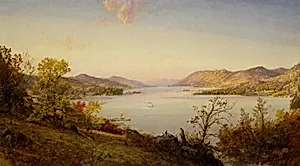
Jasper Francis Cropsey'sGreenwood Lake* (1875) captures the serene beauty of New York lake nestled amid towering mountains, a quintessential scene from the American Northeast. As a leading figure in the Hudson River School Cropsey was renowned for his romantic landscapes that celebrated the untamed splendor of the nation's wilderness. Painted in oil, the work exemplifies the movement's emphasis on dramatic natural vistas, inviting viewers to immerse themselves in play of light on water and foliage. Cropsey's technique shines through his masterful use of luminous color and precise detail, creating a glowing atmosphere that evokes the crisp clarity of a summer day. By 1875, amid America's post-Civil War industrial boom, such paintings served as nostalgic odes to pristine nature, countering rapid urbanization. Greenwood Lake, a popular 19th-century retreat near the New York-New Jersey border, symbolizes this idyllic escape. Housed in the Smithsonian American Art Museum through a gift from Ellen R. Wheeler, this piece highlights Cropsey's enduring legacy in preserving America's visual heritage. Visitors today can still feel the artist's reverence for the land, reminding us of nature's timeless allure.
About the Artist
Jasper Francis Cropsey · 1823–1900
Jasper Francis Cropsey (1823–1900) was an American landscape painter associated with the Hudson River School, the influential mid-nineteenth-century movement that celebrated the natural grandeur of the American continent in large, luminous canvases. Born on Staten Island, New York, Cropsey initially trained as an architect — a background that gave him a strong sense of spatial structure and formal...