
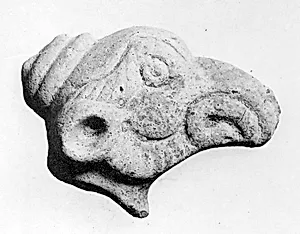
Grotesque Head
Unknown Artist
early 12th century
Medium
Earthenware
Dimensions
1 3/4 x 2 1/4 in. (4.4 x 5.7 cm)
Classification
Sculpture
Culture
Central Asia
Department
Asian Art
Museum
Metropolitan Museum of Art, New York, NY
Credit
Rogers Fund, 1930
Accession Number
30.32.60
Rights
Public Domain
Tags
Art Historical Context
This petite earthenware sculpture, *Grotesque Head*,ails from Central Asia in the early 12th century a vibrant era along the Silk Road where diverse cultures intertwined. Crafted from fired clay, this 1 3/4 x 2 1/4-inch (4.4 x 5.7 cm) piece exemplifies the region's of small-scale ceramic figurines, often used in architectural decoration or as protective talismans. Its exaggerated, menacing features—typical of "grotesque" motifslikely served an apotropaic function, warding off evil spirits in homes, mosques, or tombs. In Central Asian art, such heads reflect the fusion of pre-Islamic and Islamic influences, blending nomadic steppe traditions with Persian ceramic techniques. Earthenware was prized for its accessibility and ability to capture intricate details through modeling and low-fire glazing, making it ideal for expressive, everyday objects. Though the artist remains unknown, the work's survival speaks to the enduring craftsmanship of anonymous artisans whose creations bridged trade routes and spiritual beliefs. Today, acquired through the Rogers Fund in 1930, this *Grotesque Head* invites us to ponder the uncanny in ancient life—reminding visitors that even tiny sculptures carried big protective power in a world of unseen threats. (198 words)