
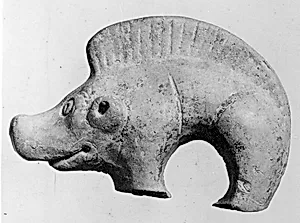
Pig
Unknown Artist
early 12th century
Medium
Earthenware
Dimensions
2 x 3 in. (5.1 x 7.6 cm)
Classification
Sculpture
Culture
Central Asia
Department
Asian Art
Museum
Metropolitan Museum of Art, New York, NY
Credit
Rogers Fund, 1930
Accession Number
30.32.61
Rights
Public Domain
Tags
Art Historical Context
This delightful earthenware pig, crafted an unknown artist in Central Asia during the early th century, measures just 2 x 3 inches (5.1 x 7.6 cm), making a pocket-sized marvel of ancient sculpture. Acquired through the Rogers Fund in 1930 and housed in the Metropolitan Museum of's Asian Art department, exemplifies the modest yet expressive figurines produced in regions like Transoxiana, where pottery workshops thrived amid Turkic and Persian cultural exchanges. Earthen, fired at relatively low temperatures, was an accessible medium for creating detailed animal forms, often using simple coil-building or molding techniques. This pig's compact, rounded body and stylized features suggest it captured the everyday vitality of livestock in a pastoral society, possibly serving as a toy, amulet, or votive offering. During this era—under dynasties like the Qarakhanids—such sculptures bridged pre-Islamic traditions and emerging Islamic influences, reflecting continuity in animal husbandry despite shifting religious norms. Pigs, less common in later Islamic art due to dietary prohibitions, appear in these early pieces as symbols of abundance and rural life, offering visitors a glimpse into the diverse, resilient cultures of medieval Central Asia. A charming reminder of artistry in the ordinary!