
Halberd
1620/50
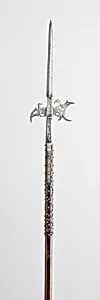
Medium
Steel, iron, and wood
Dimensions
H.: 214.6 cm (84 1/2 in.); Blade: H.: 47.5 cm (18 3/4 in.)
Classification
edged weapon-staff
Department
Applied Arts of Europe
Museum
Art Institute of Chicago
Accession Number
106519
Rights
Public Domain
About this artwork
Compared with the rugged pole arms of the previous century, used to pull down horsemen, this halberd is more delicate. The ax-head is little more than a crescent shape, and the pierced fluke or hook is mostly ornamental. Still, the central point remains a functional blade. Military officers would have used halberds like this to lead and press their men into formation.
Art Historical Context
Step into the armorers' workshops of 17th-century Europe with this striking halberd, a masterful example of applied arts from around 1620–1650. Standing an impressive 214.6 cm tall, with a formidable 47.5 cm steel blade combining axe, spike, and thrusting point, this edged staff weapon exemplifies the fusion of lethal function and skilled craftsmanship. Forged from steel and iron, with a sturdy wooden shaft, it reflects the era's advanced metallurgical techniques, where blades were meticulously hammered, tempered, and often etched for both strength and subtle decoration. Halberds like this one were iconic on Europe's battlefields during the Thirty Years' War (1618–1648), wielded by infantry such as pikemen and ceremonial guards. They bridged medieval polearms and emerging firearms, offering versatility for slashing, stabbing, and hooking enemy armor. Beyond warfare, these weapons symbolized authority, adorning city watchmen and royal processions, blending martial utility with cultural prestige. Housed in the Art Institute of Chicago's Department of Applied Arts of Europe, this anonymous masterpiece invites us to ponder the human ingenuity behind the tools of conflict—reminders of a time when iron and wood forged both empires and histories.
About the Artist
Unknown
The artist designated as "Unknown" in our virtual museum's collection exemplifies a poignant chapter in art history: creators whose identities have faded into obscurity despite the enduring power of their work. With only one known artwork attributed to them in our holdings, this figure represents countless anonymous hands that shaped visual culture across centuries. Museums worldwide, including th...