
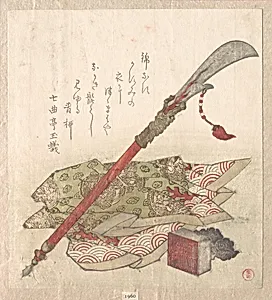
Halberd, Brocade Robe and Seal
19th century
Medium
Woodblock print (surimono); ink and color on paper
Dimensions
8 1/8 x 7 3/8 in. (20.6 x 18.7 cm)
Classification
Prints
Culture
Japan
Department
Asian Art
Museum
Metropolitan Museum of Art, New York, NY
Credit
H. O. Havemeyer Collection, Bequest of Mrs. H. O. Havemeyer, 1929
Accession Number
JP1960
Rights
Public Domain
Tags
Art Historical Context
Welcome to the Asian Art galleries at the Metropolitan Museum of Art where we encounter *Halberd, Brocadee and Seal*, a 19th-century woodblock by Kubo Shunman. This intimate surimono—measuring just 8 1/8 x 7 3/8 inches—exemplifies Japan's ukiyo-e tradition, with a luxurious twist. Surimono were privately commissioned prints, often for New Year's greetings or poetry circles, featuringossed details, vibrant colors and mica accents for a shimmering effect. Shunman a poet and master printmaker of the late Edo period, crafted these gems with exquisite precision, blending everyday elegance with subtle symbolism. The composition showcases a halberd (a ceremonial pole weapon evoking samurai heritage), a richly patterned brocade robe, and an official seal—objects that whisper of status, authority, and artistry in feudal Japan. Brocade fabrics, with their gold threads and intricate weaves, were prized symbols of wealth, while seals authenticated documents or artworks. Shunman's skillful use of ink and color on paper creates a harmonious still life, inviting viewers to ponder the interplay of power and beauty in everyday artifacts. Part of the renowned H. O. Havemeyer Collection, bequeathed in 1929, this print highlights surimono's role in fostering Japan's literati culture. It's a window into an era when poetry, printmaking, and personal expression intertwined, reminding us of art's power to elevate the ordinary. (198 words)
About the Artist
Kubo Shunman · 1757–1820
Japanese, 1757–1820