
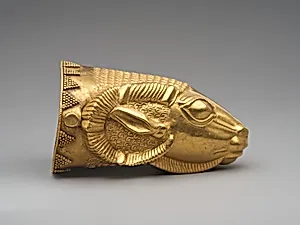
Handle or attachment
Unknown Artist
5th century BCE (?)
Medium
Gold
Dimensions
4.12 in. (10.46 cm)
Classification
Metalwork-Implements
Culture & Period
Achaemenid (?) · Achaemenid (?)
Department
Ancient Near Eastern Art
Museum
Metropolitan Museum of Art, New York, NY
Credit
Purchase, Joseph Pulitzer Bequest, 1956
Accession Number
56.142.2
Rights
Public Domain
Tags
Art Historical Context
This exquisite gold handle or attachment, just over 4 inches (10.46 cm), hails from the Ancient Near East and is tentatively dated to the 5th century. Attributed to the Achaid culture—the opulent Persian Empire that stretched from India to Egypt under rulers like Darius and Xerxes—it exemplifies the era's mastery of fine metalwork. Displayed in the Metropolitan Museum of Art's Ancient Near Art department (purchased via the Joseph Pulitzer Bequest in1956), this delicate implement likely adorned a larger object, such as a vessel or furniture, blending utility with grandeur. Crafted entirely from gold, the piece showcases the Achaemenid artisans' renowned techniques, possibly including hammering, chasing, and granulation to create intricate details. The ram motifs, hinted at in its tags, were potent symbols in Persian iconography, representing strength, fertility, and divine protection—common in royal treasures from Persepolis and Susa. Such objects highlight the empire's vast trade networks, sourcing precious metals from across its domains to produce luxury goods for elite patrons. Though its exact provenance remains uncertain, this artifact offers a tantalizing glimpse into Achaemenid artistry, where everyday functional items became emblems of imperial power and cultural sophistication. Visitors, pause to admire how 2,500 years of history gleams in your hand's span!