
Wedjat Eye Amulet
Unknown Artist
332–30 B.C.
Medium
Gold
Dimensions
H. 3.2 cm (1 1/4 in.); w. 3.7 cm (1 7/16 in.); th. 0.4 cm ( 3/16 in.)
Classification
Amulet, Wedjat eye
Period
Ptolemaic Period
Department
Egyptian Art
Museum
Metropolitan Museum of Art, New York, NY
Credit
Rogers Fund, 1923
Accession Number
23.2.68
Rights
Public Domain
Tags
Art Historical Context
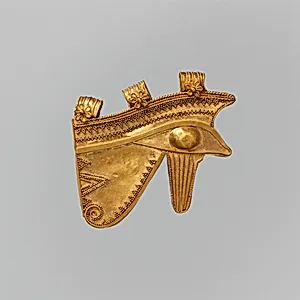
Behold the exquisite *Wedjat Eye Amulet a petite golden treasure from Egypt's Ptolemaic Period332–30 B.C.), now gracing the Metropolitan Museum of's Egyptian Art collection. Crafted in shimmering gold, this delicate piece measures just 3. cm high, 3.7 cm wide, and 0.4 cm thick—small enough to wear as jewelry yet radiating profound power. Its form captures the iconic Wedjat, or "Eye of Horus," stylized eye with distinctive markings evoking a falcon's gaze. In ancient Egyptian belief, the Wedjat symbolized protection, healing, and royal power, stemming from the myth of Horus's eye restored after battle. Worn as an amulet, it warded off evil, promoted health, and ensured wholeness—its fractions even represented mathematical units for offerings. Gold's eternal sheen amplified its magical potency, making this artifact a personal talisman for the elite during the Ptolemaic era, when Greek rulers blended Hellenistic innovation with deep-rooted Egyptian traditions. This anonymous masterpiece, acquired through the Rogers Fund in 1923, exemplifies the enduring artistry of Ptolemaic jewelers, who mastered fine repoussé and chasing techniques for such protective icons. A window into daily spirituality, it invites us to ponder the ancient quest for safeguarding life's fragile balance.