
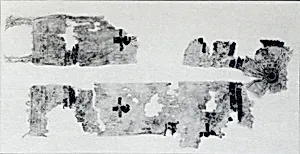
Hat Fragments
Unknown Artist
4th century
Medium
Linen, wool
Dimensions
Overall: L. 44 7/8 in. (114 cm)
Classification
Textiles-Costumes-Secular
Culture
Coptic
Department
Medieval Art
Museum
Metropolitan Museum of Art, New York, NY
Credit
Rogers Fund, 1933
Accession Number
33.10.46
Rights
Public Domain
Art Historical Context
Nestled in the Metropolitan Museum of Art's Medieval Art collection, *Hat Fragments* offers a tantalizing glimpse into 4th-century Coptic Egypt. Crafted from linen and wool, these secular textile remnants measure an impressive overall length of 44 7/8 inches (114 cm), suggesting they once formed part of a distinctive headwear ensemble. Acquired through the Rogers Fund in 3, they exemplify the enduring legacy of Coptic craftsmanship from Roman-era Egypt, where Christian communities thrived amid a fusion of pharaonic, Greco-Roman, and emerging Byzantine influences. Coptic textiles like these are prized for their rarity and preservation, thanks to Egypt's arid climate that safeguarded them in burials or domestic contexts. Linen, abundant locally from the Nile Valley, provided a sturdy base, while imported wool added vibrant colors through sophisticated weaving techniques—likely tapestry or embroidery. Such secular costumes reveal everyday fashion among Coptic people, highlighting social status, trade networks, and dyeing innovations with natural pigments. Though incomplete, these fragments whisper stories of daily life in early Christian Egypt, bridging antiquity and the medieval world. They invite us to imagine wearers navigating bustling markets or festive gatherings, their hats adorned with patterns lost to time but alive in our curiosity.