
Hatchet
Unknown Artist
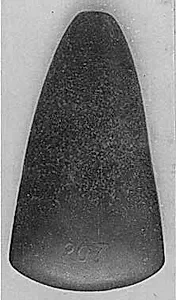
Medium
Chloromelanite
Dimensions
H. 2 15/16 in. (7.5 cm); W. 1 5/8 in. (4.2 cm); D. 1/2 in. (1.3 cm)
Classification
Jade
Culture
France
Department
Asian Art
Museum
Metropolitan Museum of Art, New York, NY
Credit
Gift of Heber R. Bishop, 1902
Accession Number
02.18.207
Rights
Public Domain
Art Historical Context
This exquisite jade hatchet, carved from chloromelanite—a rare dark green to black variety of jadeitecaptivates with its compact form, measuring just under 3 inches tall. Its sleek blade and handle, polished to a subtle luster, evoke the precision of masterful lapidary work, transforming a humble tool shape into an object of refined beauty. Displayed in the Metropolitan Museum Art's Asian Art department this piece highlights jade's enduring allure across cultures, where its toughness and translucency made it ideal for both utilitarian and symbolic carvings. Though the artist and date remain unknown, the hatchet's classification as jade and its French cultural attribution suggest possible European craftsmanship inspired by Asian traditions, perhaps during a period of cross-cultural exchange. Chloromelanite, sourced from Myanmar and prized in East Asian art, was often used for ritual objects like axes symbolizing power or ceremony—forms dating back to Neolithic times. Here, its small scale points to a decorative or votive purpose rather than practical use. A generous gift from collector Heber R. Bishop in 1902, this hatchet joins the Met's renowned jade holdings, inviting visitors to ponder the global journeys of precious materials and the artistry that elevates stone into legacy.