
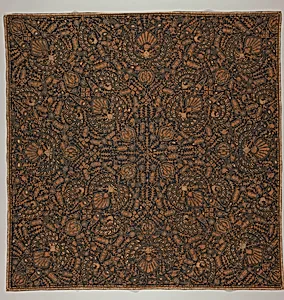
Head cloth (kain kepala)
early 19th century
Medium
printed, dyed & painted textiles
Classification
printed, dyed & painted textiles
Department
Smithsonian Collection
Museum
Smithsonian American Art Museum
Credit
Gift of Elizabeth Riefstahl
Accession Number
1953-90-19
Rights
Public Domain
About this artwork
Research in Progress
Art Historical Context
This elegant *kain kepala*, or head cloth, dates to the early 19th century and exemplifies the artistry of printed, dyed, and painted. Likely originating from Southeast Asian traditions—where "kain kepala" refers to a man's headwrap in Malay and Indonesian cultures—this piece served both practical and ceremonial purposes. Worn to shield from the sun or signify status during rituals and daily life, it reflects the era's vibrant textile traditions amid growing global trade routes that exchanged motifs and techniques across Asia and beyond. The medium highlights masterful craftsmanship: intricate printing, resist-dyeing, and hand-painting created bold patterns and colors that endured wear and washing. Such methods, common in batik-like processes, demanded patience and skill, turning cloth into cultural storytelling canvases. Donated to the Smithsonian American Art Museum by Elizabeth Riefstahl, this artifact bridges everyday utility with artistic expression. Though research continues, the *kain kepala* invites us to appreciate how textiles preserved identity and heritage in a transforming world, offering a tactile glimpse into 19th-century life. (178 words)
About the Artist
Unknown
The artist designated as "Unknown" in our virtual museum's collection exemplifies a poignant chapter in art history: creators whose identities have faded into obscurity despite the enduring power of their work. With only one known artwork attributed to them in our holdings, this figure represents countless anonymous hands that shaped visual culture across centuries. Museums worldwide, including th...