
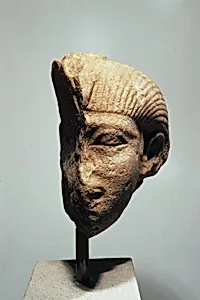
Head of a Sphinx
Unknown Artist
ca. 1981–1878 B.C.
Medium
Quartzite
Dimensions
h. 18 cm (7 1/16 in) w. 12.5 cm (4 15/16 in) d. 21 cm (8 1/4 in)
Classification
Head, sphinx
Period
Middle Kingdom
Department
Egyptian Art
Museum
Metropolitan Museum of Art, New York, NY
Credit
Purchase, Lila Acheson Wallace Gift, by exchange, 1978
Accession Number
1978.204
Rights
Public Domain
Tags
Art Historical Context
Behold the **Head of a Sphinx**, striking quartzite sculpture from Egypt's Middle Kingdom, Dynasty 12 (ca. 1981–1878 B.C.). Carved from a hard, durable stone prized for its resilience and shimmering quality, this fragment measures just 18 cm high, suggesting it once crowned a larger guardian figure. Now housed in the Metropolitan Museum Art's Egyptian Art Department it captures the enigmatic gaze of ancient royalty through finely detailed features, evoking power and mystery. In Middle Kingdom Egypt, sphinx embodied the pharaoh's divine strength—lion's body fused with a human head symbolizing wisdom and protection. These composite creatures flanked temple entrances and tombs, warding off evil. Crafted during a golden age of artistic refinement under rulers like Amenemhat I, this head exemplifies the period's mastery of stone carving. Artisans skillfully hollowed the quartzite, achieving smooth contours and an idealized face that blended human nobility with leonine ferocity, reflecting beliefs in the king's eternal vigilance. Though the full statue is lost to time, this survivor invites us to ponder the grandeur of Nile Valley monuments. Its purchase in 1978 via the Lila Acheson Wallace Gift ensures its story endures for modern visitors.