
Helmet
Unknown Artist
probably ca. 1342–57
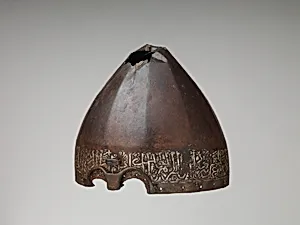
Medium
Steel, silver
Dimensions
H. 8 in. (20.3 cm); Wt. 2 lb. 4 oz. (1031 g)
Classification
Helmets
Culture
Central Asian or Russian, Blue Horde
Department
Arms and Armor
Museum
Metropolitan Museum of Art, New York, NY
Credit
Purchase, Arthur Ochs Sulzberger Gift, by exchange, 2007
Accession Number
2007.86
Rights
Public Domain
Tags
Art Historical Context
This striking steel helmet, likely crafted around 1342–57, hails from the Blue Horde—a western division of the Mongol Golden Horde that dominated Central Asia and parts of Russia during the 14th century. Standing just 8 inches tall and weighing a manageable 2 pounds 4, it was designed for a mounted warrior, balancing protection with mobility in the vast steppes. Its Central Asian or Russian origins reflect the cultural crossroads of nomadic Turkic-Mongol traditions and Islamic influences, as hinted by Arabic script tags, possibly inscriptions invoking protection or faith. Forged from durable steel with silver accents, the helmet showcases advanced metalworking techniques of the era, such as inlays or overlays that added both aesthetic appeal and status. Silver embellishments elevated such armor from mere utility to symbols of elite status among khans and their retinues, blending functionality with artistry in a time of relentless conquests. Acquired by The Metropolitan Museum of Art in 2007 through the Arthur Ochs Sulzberger Gift, this rare survivor offers a tangible glimpse into the fierce world of medieval Eurasian warfare, where craftsmanship met the demands of empire.