
Helmet (Kabuto)
Unknown Artist
17th century
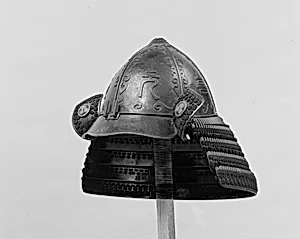
Medium
Iron, lacquer, silk, brass
Dimensions
9 in. (22.8 cm); 15 in. (38.1 cm).
Classification
Helmets
Culture
Japanese
Department
Arms and Armor
Museum
Metropolitan Museum of Art, New York, NY
Credit
Rogers Fund, 1906
Accession Number
06.45
Rights
Public Domain
Art Historical Context
This exquisite *Kabuto*, or samurai helmet, hails from 17th-century Japan during the Edo period—a time of relative peace when samurai culture flourished through art, ceremony, and tradition. Crafted by an unknown master armorer, it exemplifies the fusion of functionality and artistry in Japanese arms and armor. Standing about 9 inches tall and 15 inches wide its imposing form was designed to protect warriors on the battlefield while projecting status and intimidation. Forged from iron for strength, the helmet is adorned with lac for a glossy, weather-resistant finish—a hallmark Japanese technique that sealed wood or metal against corrosion and added vibrant colors. Delicate silk laces secured its components, while brass fittings provided durable, ornate accents. These materials not only ensured durability but also transformed the kabuto into a wearable sculpture, often customized with family crests or mythical motifs to honor heritage. In Japanese culture, kabuto transcended mere protection, symbolizing the bushido spirit of the samurai. Even in peacetime, they appeared in parades, theater, and ancestral displays. Acquired through the Rogers Fund in 1906, this piece at the Metropolitan Museum of Art invites us to ponder the elegance of warrior life.