
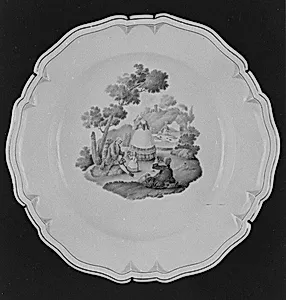
Hexafoil plate
ca. 1765
Medium
Soft-paste porcelain
Dimensions
Diameter: 17 1/2 in. (44.5 cm)
Classification
Ceramics-Porcelain
Culture
Spanish, Madrid (Buen Retiro)
Department
European Sculpture and Decorative Arts
Museum
Metropolitan Museum of Art, New York, NY
Credit
Gift of Irwin Untermyer, 1964
Accession Number
64.101.357
Rights
Public Domain
Tags
Art Historical Context
Behold the elegant *Hexafoil plate* from Spain's Real Fábrica de Buen Retiro, crafted around 1765. This large, 17½-inch-diameter dish, made of soft-paste porcelain, a distinctive six-lobed (hexafoil) rim, a shape inspired by Asian ceramics that added whimsy and grace to European tabletops. Soft-paste porcelain, a European innovation blending clay with ground glass and fired at lower temperatures, allowed factories like Buen Retiro to mimic the prized hard-paste porcelain from China without the exact formula. Established in 1760 by King Charles III in the gardens of Madrid's Buen Retiro Palace, the royal factory aimed to rival prestigious European producers like Meissen and Sèvres. Operating until 1808, it symbolized Spain's late entry into the 18th-century porcelain boom, producing luxury wares for nobility. The plate's decoration, featuring men, women, and trees—likely in vibrant pastoral scenes—reflects the Rococo taste for lively, nature-infused motifs, hand-painted with underglaze colors for enduring brilliance. Today, this gift to the Metropolitan Museum of Art from Irwin Untermyer in 1964 invites us to appreciate how porcelain bridged cultures, turning everyday objects into artistic treasures of the Enlightenment era.