
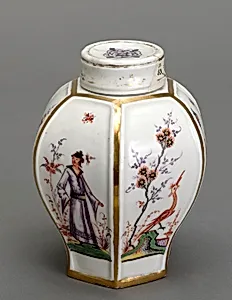
Hexagonal Balustrade Tea Caddy
Classification
ceramics
Department
Smithsonian Collection
Museum
Smithsonian American Art Museum
Credit
Gift of Eleanor Garnier Hewitt
Accession Number
1931-40-45-a,b
Rights
Public Domain
About this artwork
Research in Progress
Art Historical Context
Step into the elegant world of 18th-century European luxury with the *Hexagonal Balustrade Caddy*, crafted by renowned Meissen Porcelain Manufactory Germany between 1725 and 1740. As one of Europe's pioneering porcelain producers—active since 1710—Meissen revolutionized the decorative arts by mastering hard-paste porcelain, a secret long guarded by Chinese artisans. This hexagonal caddy, shaped like a balustrade railing, exemplifies the manufactory's early mastery of intricate forms in ceramics, now housed in the Smithsonian American Art Museum thanks to the gift of Eleanor Garnier Hewitt. Tea caddies like this one were prized status symbols during the Rococo era, when tea drinking swept through aristocratic homes across Europe. Securely locking precious tea leaves imported from Asia, these containers blended functionality with opulent design, often mimicking architectural motifs for a sense of grandeur. Meissen's innovations in firing and molding allowed for such architectural whimsy, marking a shift from imitation to true European porcelain artistry. Though research continues on this piece, its survival speaks to the enduring allure of Meissen's technical brilliance and cultural prestige, bridging trade, taste, and innovation in the Age of Enlightenment. (198 words)