
Hexagonal Lantern
Kangxi period, 1662/1722
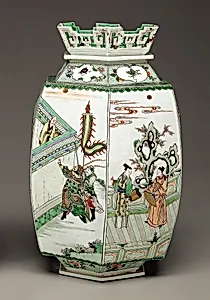
Medium
porcelain with overglaze famille verte enamels on the biscuit
Dimensions
overall: 28.5 x 19.4 cm (11 1/4 x 7 5/8 in.)
Classification
Decorative Art
Department
CSD
Museum
National Gallery of Art, Washington, D.C.
Credit
Widener Collection
Accession Number
1942.9.587
Rights
Public Domain
Art Historical Context
Step into the luminous world of Qing Dynasty porcelain with the *Hexagonal Lantern*, a piece from the Kangxi period1662–1722). Crafted during the reign of Emperor Kangxi—one of China's most celebrated eras for artistic innovation—this lantern stands at 28.5 x 19.4 cm, its six-sided form evoking the geometric elegance of imperial design. Likely used for festivals or scholarly illumination, it exemplifies the decorative arts that blended utility with opulent beauty. The lantern's medium is porcelain with overglaze famille verte enamels on biscuit, a sophisticated technique from Jingdezhen kilns. The biscuit body—unglazed and matte—provides a tactile contrast to the vibrant enamels fired at low temperatures over the glaze. Famille verte, meaning "green family," features lush greens alongside reds, yellows, and blues, depicting floral motifs or auspicious symbols that symbolized prosperity and harmony in Chinese culture. Housed in the National Gallery of Art's Widener Collection, this lantern highlights the Qing court's mastery of porcelain export and domestic luxury. Its intricate enameling reflects the period's technical prowess, making it a window into 17th-century China's artistic golden age. Visitors, imagine its soft glow during Lantern Festival celebrations!
About the Artist
Chinese Qing Dynasty · 1644–present
"Chinese Qing Dynasty" serves as a collective attribution in museum collections for anonymous artworks produced during China's Qing era (1644–1912), encompassing the works of imperial workshop artisans rather than a single individual. These creators operated primarily from the imperial kilns at Jingdezhen, where potters, painters, and enamellers collaborated under strict court oversight, though sp...