
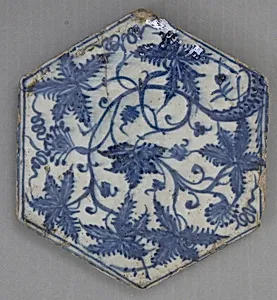
Hexagonal Tile
Unknown Artist
15th century
Medium
Stonepaste; underglaze painted
Classification
Ceramics-Tiles
Department
Islamic Art
Museum
Metropolitan Museum of Art, New York, NY
Credit
Rogers Fund, 1967
Accession Number
67.69.5
Rights
Public Domain
Tags
Art Historical Context
This exquisite hexagonal tile, crafted in the 15th by an unknown artist, exemplifies the refined artistry of Islamic ceramics. Made from stonepaste—a composite of quartz, clay, and glass frit—this medium allowed artisans to mimic the translucency of Chinese porcelain, which was highly prized but unavailable in the Islamic world. The underglaze painting technique involved applying pigments directly onto the unfired body before glazing and firing, ensuring vibrant, durable colors that withstood centuries use. Featuring delicate leaf motifs, as suggested by its tags, the tile reflects the Islamic tradition of vegetal ornamentation, evoking lush paradise gardens described in the Quran. Hexagonal tiles like this were ingeniously interlocked to form expansive decorative panels in mosques, madrasas, and palaces across the Middle East and beyond, creating shimmering mihrab niches or intricate arabesque friezes. Acquired through the Rogers Fund in 1967 and housed in the Metropolitan Museum of Art's Islamic Art department, this tile offers a window into the 15th-century renaissance of tilework under Timurid and Ottoman patronage. Its geometric form and natural motifs highlight the harmony of mathematics and nature central to Islamic design, inviting visitors to appreciate the enduring beauty of architectural splendor.