
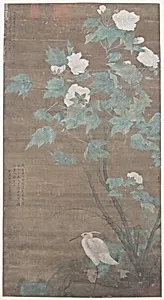
Hibiscus and Egret
dated 1724
Medium
Framed scroll; ink and color on silk
Dimensions
44 1/2 x 23 3/4 in. (113 x 60.3 cm)
Classification
Paintings
Culture & Period
China · Qing dynasty (1644–1911)
Department
Asian Art
Museum
Metropolitan Museum of Art, New York, NY
Credit
Gift of Mrs. Anna Woerishoffer, 1922
Accession Number
22.92
Rights
Public Domain
Tags
Art Historical Context
**Hibiscus and Eg**, created in 1724 by Jiang Ting, exemplifies the refined artistry of Qing dynasty China (1644–1911). Jiang, a distinguished court painter who served under emperors Kangxi and Yongzheng specialized in the time-honored bird-and-f genre. This framed hanging scroll, rendered in vibrant ink and color on silk44½ × 23¾ in.), captures a hibiscus bloom in full summer glory alongside a graceful egret, inviting viewers into a serene natural harmony. The medium of silk enhances the painting's luminous quality, allowing delicate washes of color to evoke texture and depth—a hallmark of professional literati and court styles. Jiang's meticulous brushwork blends precise outlines with subtle shading, showcasing technical mastery honed in the imperial workshops of Beijing. Culturally, such works symbolized prosperity and elegance; hibiscus evoked fleeting beauty and summer vitality, while the egret represented purity and scholarly poise. Donated to the Metropolitan Museum Art in 1922, this piece offers a window into Qing aesthetic ideals, nature mirrored moral and cosmic order, delighting collectors and scholars alike.