
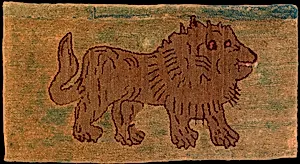
Hooked Rug with Lion
ca. 1860
Medium
Decorative Arts-Fiber
Classification
Decorative Arts-Fiber
Department
Smithsonian Collection
Museum
Smithsonian American Art Museum
Credit
Smithsonian American Art Museum, Gift of Herbert Waide Hemphill, Jr. and museum purchase made possible by Ralph Cross Johnson
Accession Number
1986.65.347
Rights
Public Domain
Tags
Art Historical Context
Step into the cozy world of 19th American folk art with *Hooked Rug with Lion an anonymous creation from around 1860 now housed in the Smithsonian American Museum. Crafted by an unidentified American artist, this vibrant fiber work exemplifies the ingenuity of everyday makers during the Civil War era, when homemade textiles adorned rural homes and told stories through bold imagery. The central lion motif—a symbol of strength and majesty—likely draws from popular patterns or imagination, rendered in colorful wool strips for a striking, textured effect. Hooked rugs like this were made using a simple yet skilled technique: narrow fabric strips were punched through a coarse backing like burlap with a metal hook, building intricate designs from recycled materials. This medium was especially significant in American decorative arts, empowering women in isolated communities to create durable, personalized floor coverings that blended utility with artistry. Affordable and resilient, these rugs transformed scraps into treasures. Acquired through the generous gift of Herbert Waide Hemphill, Jr., and a museum purchase enabled by Ralph Cross Johnson, this piece celebrates vernacular creativity in the Smithsonian's Decorative Arts-Fiber collection. It invites us to appreciate the unsung artists whose handiwork captured the spirit of mid-19th-century America. (198 words)
About the Artist
Unidentified (American) ( ) · 1851 –1899
1851–1899