
Blazon
Unknown Artist
probably second half 13th century
Medium
Linen; embroidered with silk
Dimensions
H. 4 1/2 in. (11.4 cm) W. 6 5/8 in. (16.8 cm)
Classification
Textiles-Embroidered
Department
Islamic Art
Museum
Metropolitan Museum of Art, New York, NY
Credit
Rogers Fund, 1972
Accession Number
1972.120.5
Rights
Public Domain
Tags
Art Historical Context
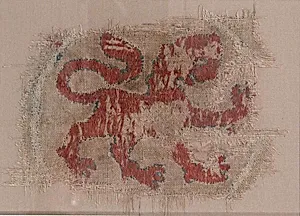
This exquisite embroidered blazon, dating to the second half of the 13th century hails from the Islamic world and exemplifies the refined textile arts of the medieval period. Crafted from linen and adorned with vibrant silk threads, it measures just 4½ by 6⅝ inches—small enough to serve as a badge, insignia, or decorative patch on garments, banners, or furnishings. Now housed in the Metropolitan Museum of Art's Art Department (acquired through the Rogers Fund in 2), it showcases the technical mastery of anonymous artisans who blended functionality with symbolism. The blazon's design likely features lions, powerful motifs in Islamic heraldry symbolizing strength, courage, and royal authority. Such emblems were common in regions like the Seljuk or early Mamluk realms, where textiles played a key role in conveying status and identity amid expanding trade networks along the Silk Road. Silk embroidery, a luxurious import-turned-local specialty, allowed for intricate stitching techniques like counted thread work or couching, creating durable yet opulent surfaces that withstood daily use. As a rare survivor from this era, the blazon offers a window into everyday opulence in medieval Islamic society, where even modest objects pulsed with cultural prestige. Visitors, imagine pinning this fierce lion to a tunic— a portable emblem of prowess!