
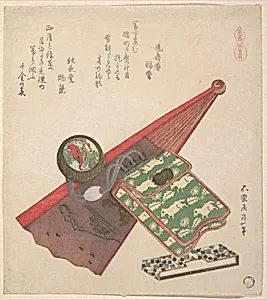
Horse Pattern (Koma shōbu), from the series Horses
Medium
Woodblock print (surimono); ink and color on paper
Dimensions
8 1/4 x 7 3/8 in. (21 x 18.7 cm)
Classification
Prints
Culture & Period
Japan · Edo period (1615–1868)
Department
Asian Art
Museum
Metropolitan Museum of Art, New York, NY
Credit
Rogers Fund, 1922
Accession Number
JP1393
Rights
Public Domain
Tags
Art Historical Context
Katsushika Hokus's *Horse Pattern (Komaōbu)* from his *Horses* series, in 1822 during Japan's Edo period (1615–1868), exemplifies the master's prowess in ukiyo-e woodblock printing. Hokusai, renowned for works like *The Great Wave off Kanag*, captured the elegance and vitality of horses in this intimate surimono—a luxury print often commissioned for private occasions like New Year's greetings. Measuring just 8¼ x 7⅜ inches, its compact scale invited close admiration, blending dynamic equine forms with playful motifs suggested by tags like birds and fans. As a surimono, the artwork showcases advanced techniques: intricate carving for fine lines, vibrant inks layered with color, and subtle embossing for texture on paper. Horses, symbols of speed and nobility in Japanese culture, are rendered in a repeating "koma shōbu" pattern—evoking games or decorative textiles—highlighting Hokusai's innovative fusion of everyday motifs with artistic poetry. Housed in the Metropolitan Museum of Art's Asian Art Department (Rogers Fund, 1922), this print reflects Edo-era urban sophistication, where affordable yet exquisite prints democratized art. Visitors will delight in its whimsical energy, a testament to Hokusai's enduring influence on global printmaking.
About the Artist
Katsushika Hokusai · 1760–1849
Katsushika Hokusai (1760-1849) stands as one of history's most influential artists, a Japanese master who revolutionized the ukiyo-e woodblock print tradition and profoundly shaped Western art. Born in the Katsushika district of Edo (modern-day Tokyo) to an artisan family, Hokusai lived through nearly nine decades of extraordinary creative evolution, adopting over thirty different artistic names t...