
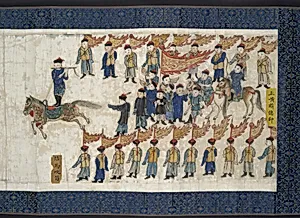
清 那爾敦布 順治皇帝進京之隊伍賽馬全圖 卷|Horsemanship Competition for the Shunzhi Emperor
dated 1662
Medium
Handscroll; ink and color on paper
Dimensions
Image: 8 in. × 54 ft. 7 in. (20.3 × 1663.7 cm)
Classification
Paintings
Culture & Period
China · Ming dynasty (1368–1644)
Department
Asian Art
Museum
Metropolitan Museum of Art, New York, NY
Credit
Purchase, The Dillon Fund Gift, 2002
Accession Number
2002.328
Rights
Public Domain
Tags
Art Historical Context
Behold the majestic *Horsemanship Competition for Shunzhi Emperor*, a handscroll painted by Nardunbu in 1662. This ink and color on paper masterpiece stretches an astonishing 54 feet and 7 inches long—perfect for unrolling to reveal a panoramic procession. Created during China's transition from Ming to Qing rule, it captures the thrill of equestrian prowess, with vivid depictions of men and horses in dynamic motion, evoking the grandeur of imperial spectacle. The Shunzhi Emperor (r. 1644–1661), the young Manchu ruler who solidified Qing dominance after the fall of the Ming dynasty, is the centerpiece. Likely commemorating his triumphant entry into Beijing, the scroll showcases a ceremonial horsemanship contest amid his retinue, blending Manchu martial traditions with Chinese artistic finesse. Such events symbolized power and cultural fusion in the early Qing court. Nardunbu's technique employs fine brushwork and vibrant colors to narrate the scene sequentially, a hallmark of handscrolls that invited viewers to "read" the story like a filmstrip. Housed at the Metropolitan Museum of Art, this rare work highlights Qing painting's evolution, merging documentary precision with celebratory flair. A true window into 17th-century imperial pomp!