
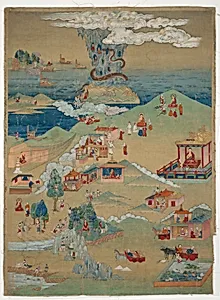
Painted Banner (Thangka) of Five Morality Tales from the Avadana Kalpalata Jataka
late 18th century
Medium
Pigment and gold on cotton
Dimensions
85 × 60 cm (33 1/2 × 23 5/8 in.)
Classification
tankas (scrolls or banners)
Department
Arts of Asia
Museum
Art Institute of Chicago
Accession Number
144971
Rights
Public Domain
About this artwork
This thangka depicts five stories about the Buddha Shakyamuni in his previous lives, employing the Eastern Tibetan Palpung style of spacious landscapes interspersed with comparatively small but finely detailed illustrations. The narrative scenes show good deeds the Buddha performed, helping him on the way to enlightenment. In doing so, they demonstrate the laws of cause and effect (karma) and the importance of Buddhist virtues like generosity and compassion. The tales come from the Avadana Kalpa...
Art Historical Context
This exquisite thangka, or painted Buddhist scroll banner, from the late 18th vividly illustrates five morality tales drawn from the *Avad Kalpalata Jataka a collection of stories emphasizing ethical lessons and the consequences of karma. Likely originating from the Himalayan region, such as Tibet or Nepal, these narratives echo the Jataka tales of the Buddha's past lives, serving as visual sermons to inspire devotion and moral reflection among practitioners. Crafted with pigments and gold on cotton, 85 × 60 cm banner exemplifies traditional thangka techniques: mineral-based colors applied in fine layers for luminous depth, with gold enhancing divine radiance and sacred motifs. The cotton support made it lightweight and portable, ideal for mounting in monasteries, homes, or during rituals, where it could be unrolled for contemplation or teaching. Housed in the Art Institute of Chicago's Arts of Asia department, this anonymous masterpiece highlights the enduring cultural role of thangkas in Tibetan Buddhism—bridging art, spirituality, and education. Its compartmentalized scenes invite viewers to ponder timeless virtues like compassion and wisdom, offering a window into 18th-century Himalayan piety.
About the Artist
Unknown
The artist designated as "Unknown" in our virtual museum's collection exemplifies a poignant chapter in art history: creators whose identities have faded into obscurity despite the enduring power of their work. With only one known artwork attributed to them in our holdings, this figure represents countless anonymous hands that shaped visual culture across centuries. Museums worldwide, including th...