
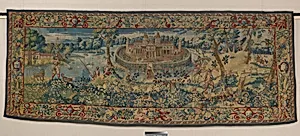
Hunters in a Landscape
Medium
Wool, silk (14 warps per inch; 5-6 per cm)
Dimensions
H. 70 7/8 x W. 181 7/8 in. (180 x 462 cm); Weight (rolled on tube): 38lb. (17.2367kg)
Classification
Textiles-Tapestries
Culture
British, probably London
Department
European Sculpture and Decorative Arts
Museum
Metropolitan Museum of Art, New York, NY
Credit
Purchase, Walter and Leonore Annenberg Acquisitions Endowment Fund, Rosetta Larsen Trust Gift, and Friends of European Sculpture and Decorative Arts Gifts, 2009
Accession Number
2009.280
Rights
Public Domain
Tags
Art Historical Context
Step into the vibrant world of 16th tapestry artistry with *Hunters in a Landscape a monumental wool and silk wall hanging created around 1575–95. Measuring an impressive 70⅞ × 181⅞ inches (180 ×462 cm) and weighing 38 pounds when rolled, this British piece—likely produced in London—exemplifies the grandeur of European decorative arts.ributed to designs by Swiss artist Jost Amman woven by anonymous Flemish artisans, it reflects the international collaboration that defined high-end textile production of the era. Tapestries like this served as luxurious status symbols for the elite, adorning castle halls to insulate against drafts while showcasing wealth and leisure pursuits. The fine weave (14 warps per inch) highlights masterful Flemish techniques, blending durable wool with lustrous silk for rich colors and intricate details. Vivid scenes unfold across its length: hunters on horseback with loyal dogs pursue prey amid a lively landscape dotted with birds, swans, fishing figures, houses, and even exotic lions—evoking the Renaissance fascination with nature's wonders and aristocratic hunts. Acquired by The Metropolitan Museum of Art in 2009 through generous gifts, this tapestry transports us to an age when art wove stories of adventure into everyday opulence, inviting you to trace every thread of its timeless allure.
About the Artist
Jost Amman|Anonymous Flemish weavers|Anonymous, 16th century · 1539–1591
Jost Amman (1539–1591) was a Swiss-born woodcut designer, engraver, and illustrator who became one of the most prolific and influential graphic artists of sixteenth-century Germany, producing an output of extraordinary range and technical virtuosity that shaped the visual culture of the later Reformation era. Born in Zurich, Amman moved to Nuremberg around 1560, the city that had been the center o...