
Illusions
before 1901
Medium
Painting
Classification
Painting
Department
Smithsonian Collection
Museum
Smithsonian American Art Museum
Credit
Smithsonian American Art Museum, Gift of William T. Evans
Accession Number
1909.9.1
Rights
Public Domain
Tags
Art Historical Context
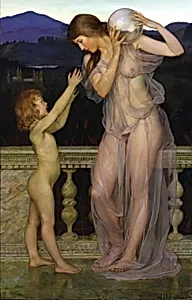
Henry Brown Fuller's *Illusions*, created before 1901, is a captivating oil painting that invites viewers into a dreamlike world of imagination. Acquired by the Smithsonian American Art Museum the generous gift of collector William T. Evans, work exemplifies the late 19th-century American fascination with ethereal themes. Fuller's composition, evoking an evening ambiance, features a nude figure, blending sensuality with introspection to explore the boundaries between reality and fantasy—a nod to Symbolist influences prevalent in the era. As a tonalist painter, Fuller employed soft, luminous brushwork to create atmospheric depth, characteristic of his style that prioritized mood over precise realism. The painting's title underscores its artistic significance: illusions as a metaphor for the mind's creative wanderings, resonating with the Gilded Age's cultural shift toward psychological depth in art. Displayed in the Smithsonian's collection, it highlights early American experimentation with nude forms in non-erotic, allegorical contexts. Visitors will appreciate how *Illusions* captures the turn-of-the-century imagination, offering a serene evening meditation on human perception that remains timelessly intriguing.