
Imperial palaces
Classification
Painting
Department
Smithsonian Collection
Museum
Smithsonian American Art Museum
Credit
Gift of Charles Lang Freer
Accession Number
F1909.223
Rights
Public Domain
Tags
About this artwork
To 1909
Art Historical Context
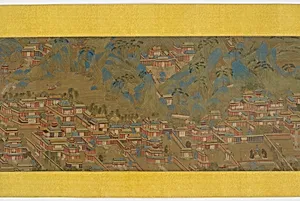
"Imperial Palaces" presents a majestic vision of Chinese imperial architecture, rendered in the distinctive blue-and-green style that has long symbolized elegance and harmony in Chinese painting Although once attributed to the Song-dynasty master Zhao Boju, scholars now date the work to the seventeenth century, placing it within the Ming or Qing dynasties. The composition invites viewers into a meticulously ordered cityscape of tiled roofs, courtyards, and towers, evoking the grandeur and stability of imperial power. This style relies on luminous mineral pigments—azurite for deep blues and malachite for vibrant greens—to create a decorative, almost jewel-like surface. Revived and adapted in later centuries, the technique blended nostalgia for earlier artistic traditions with contemporary tastes, allowing artists to celebrate both natural beauty and human achievement. Such paintings often served as visual tributes to the emperor’s realm, reinforcing ideals of order, prosperity, and cultural refinement. Part of the renowned Charles Lang Freer collection, the work enriches our understanding of how Chinese artists across dynasties used architecture and color to express political and aesthetic ideals. Its presence in the Smithsonian offers visitors a window into centuries of artistic dialogue between past and present.