
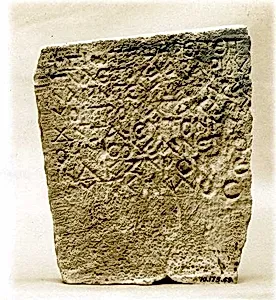
Inscribed Stele
Unknown Artist
6th–7th century
Medium
Limestone; incised
Dimensions
L. 14 in. (35.6 cm) W. 11 3/4 in. (29.8 cm) D. 3 in. (7.6 cm)
Classification
Sculpture
Department
Islamic Art
Museum
Metropolitan Museum of Art, New York, NY
Credit
Rogers Fund, 1910
Accession Number
10.175.69
Rights
Public Domain
Tags
Art Historical Context
Welcome to the Metropolitan Museum of Art's Islamic Art department, where this intriguing *Inscribed Stele* the 6th–7th century invites us into the world of Coptic Egypt. Crafted from limestone and meticulously incised—meaning the inscriptions were carefully carved into the surface—this rectangular slab measures 14 inches long, 11¾ inches wide, and inches deep. Acquired through the Rogers Fund in 0, it exemplifies early stone sculpture from a pivotal era. Coptic art, tagged here, flourished in Christian Egypt amid Greco-Roman, Byzantine, and native Egyptian influences, just before and during the Arab conquest of 641 CE. Such steles were often used as gravestones or memorials, their incised texts typically recording prayers, names, or epitaphs in Coptic script (a late Egyptian language using Greek letters). The modest dimensions suggest it was portable, perhaps for a tomb or church setting, highlighting everyday devotional life. Artistically, the incising technique showcases skilled stonework, where precision ensured legibility and durability against Egypt's harsh climate. This piece bridges late antiquity and early Islamic Egypt, reflecting cultural continuity in funerary traditions amid religious shifts—a testament to resilient communities preserving their heritage.