
Inscribed Stele
Unknown Artist
6th–7th century
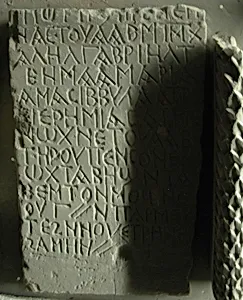
Medium
Limestone; incised
Dimensions
H. 20 1/2 in. (52.1 cm) W. 13 in. (33 cm)
Classification
Sculpture
Department
Islamic Art
Museum
Metropolitan Museum of Art, New York, NY
Credit
Rogers Fund, 1910
Accession Number
10.175.103
Rights
Public Domain
Art Historical Context
This inscribed stele, crafted from limestone in the 6th–7th century, stands as a poignant artifact from the dawn of the Islamic era. Measuring 20½ inches tall and 13 inches wide, it exemplifies early Islamic sculpture, likely serving as a funerary or commemorative marker. Acquired through the Rogers Fund in 1910, it resides in the Metropolitan Museum of Art's Department of Islamic Art, offering visitors a tangible link to a transformative period when Islam emerged amid the cultural crossroads of the Arabian Peninsula and Byzantine influences. The stele's incised technique—precise carvings etched directly into the durable limestone—highlights the artisan's skill in creating enduring inscriptions, possibly Quranic verses, names, or dedications rendered in elegant early Kufic script. Such monuments were vital in Islamic society for honoring the deceased and preserving memory, reflecting a shift from figural representation toward epigraphy as a primary artistic expression, in line with emerging aniconic traditions. Though the artist remains unknown, this modest yet powerful slab invites reflection on daily life, faith, and craftsmanship in early Islam, underscoring how everyday stonework carried profound spiritual weight.