
Intaglio
18th century
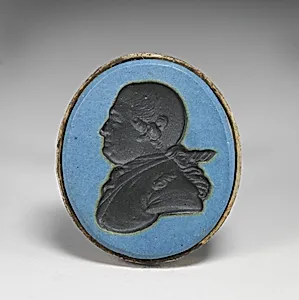
Medium
Jasperware
Dimensions
Height: 13/16 in. (2.1 cm)
Classification
Ceramics-Pottery
Culture
British, Etruria, Staffordshire
Department
European Sculpture and Decorative Arts
Museum
Metropolitan Museum of Art, New York, NY
Credit
Rogers Fund, 1914
Accession Number
14.132.26
Rights
Public Domain
Tags
Art Historical Context
This exquisite *Intaglio* by Josiah Wedgwood exemplifies18th-century British ceramic innovation. Crafted in Jasperware—a, unglazed stonewaregwood developed around 1775—this tiny gem (just 13/16 inch high) mimics the engraved profiles of ancient Roman intaglios. The tags suggest it features a male profile, in crisp white relief against a colored body, showcasing Wedgwood's mastery of cameo-like contrasts. Wedgwood, founder of the Etruria factory in Staffordshire revolutionized pottery by imitating classical antiquities, blending industrial precision with neoclassical elegance. Jasperware's matte finish and durability made it ideal for decorative objects, drawing inspiration from Etruscan and Greco-Roman artifacts unearthed during the era's archaeological fervor. This piece, acquired via the Rogers Fund in 1914, highlights how Wedgwood made luxury accessible, producing affordable yet sophisticated replicas for Enlightenment collectors. Housed in the Metropolitan Museum of Art's European Sculpture and Decorative Arts department, the *Intaglio* underscores ceramics' role in democratizing classical art, bridging ancient grandeur with modern manufacturing. A testament to British ingenuity, it invites visitors to appreciate the tactile beauty of Wedgwood's enduring legacy.
About the Artist
Josiah Wedgwood · 1730–1795
Josiah Wedgwood (1730–1795) was born in Burslem, Staffordshire, the thirteenth child of a potter whose family had worked in the craft since the seventeenth century. Apprenticed to his elder brother Thomas following their father's death, he went on to a partnership with Thomas Whieldon of Fenton — the most respected potter in England at the time — which gave him command of all the principal techniq...