
Interior Alcove
Classification
Department
Smithsonian Collection
Museum
Smithsonian American Art Museum
Credit
Purchased for the Museum by the Advisory Council
Accession Number
1921-6-341-8
Rights
Public Domain
About this artwork
Research in Progress
Art Historical Context
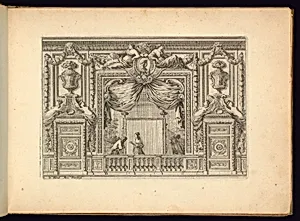
**Interior Alcove** by Jean Le Paut (French, 1618–1682), created around 1651, offers a glimpse into the opulent world of 17th-century French decorative arts. Le Pautre, a engraver and designer who worked under Louis XIV, was renowned for his intricate prints that captured the grandeur of Baroque interiors. This print, classified within the Smithsonian American Art Museum's collection, depicts an elegant alcove cozy, recessed architectural niche popular in French châteaux and particuliers—showcasing the era's lavish ornamentation amid the early stirrings of absolutist splendor at Versailles. As a print from an unknown medium, the work exemplifies how such reproductions revolutionized design dissemination. Le Pautre's precise line work and imaginative compositions influenced architects, cabinetmakers, and artisans across Europe, bridging fine art and applied crafts. Produced during France's cultural ascendance, it reflects the fusion of classical symmetry with exuberant motifs, from sculpted niches to draped fabrics, embodying the Baroque's theatricality. Acquired through the museum's Advisory Council, *Interior Alcove* invites visitors to ponder the artistry behind everyday luxury. Though research continues, it stands as a testament to Le Pautre's enduring legacy in shaping the Louis XIV style. (198 words)