
Iris Garden
c. 1781/89
Medium
Color woodblock print; oban triptych
Dimensions
37.1 × 24.2 cm (right sheet), 37.2 × 24.8 cm (center sheet), 37.3 × 25.2 cm (left sheet)
Classification
woodblock print
Department
Arts of Asia
Museum
Art Institute of Chicago
Accession Number
21746
Rights
Public Domain
Art Historical Context
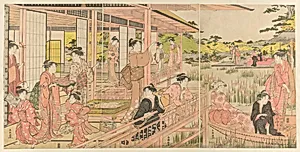
Step into the serene beauty of *Iris Garden*, a captivating color woodblock print triptych by Katsukawa Shunchô, created around 1781–89. This Edo-period masterpiece from Japan's ukiyo-e tradition—meaning "pictures of the floating"—unfolds across three oban sheets (each roughly 37 × 25 cm), offering a panoramic view of lush iris blooms swaying in a tranquil garden. Shunchô, a master of the Katsukawa school, renowned for his elegant depictions of nature and daily life, blending delicate figures with vibrant seasonal motifs. The woodblock printing technique exemplifies ukiyo-e innovation: artisans carved separate blocks for each color, layering them precisely to achieve luminous blues, greens, and purples that evoke a misty summer haze. Irises, symbols of valor and purity in Japanese culture (inspired by tales like *The Tale of the Heike*), transform the garden into a poetic escape, reflecting the era's fascination with fleeting beauty amid urban pleasures in 18th-century Tokyo. Housed in the Art Institute of Chicago's Arts of Asia department, this triptych highlights Shunchô's skill in harmonizing human grace with nature's splendor, inviting visitors to savor the ephemeral charm of Japan's golden age of printmaking.
About the Artist
Katsukawa Shunchô · 1780–1801
Katsukawa Shunchō was a Japanese designer of ukiyo-e woodblock prints active from approximately 1780 to 1795, one of the most graceful practitioners of the art of bijinga — pictures of beautiful women. He trained in the studio of Katsukawa Shunshō, the founding master of the Katsukawa School, whose pupils also included the young Hokusai. Shunshō's school was primarily known for realistic portraits...