
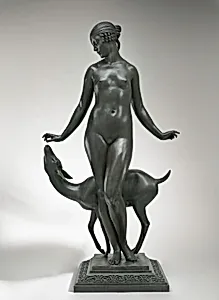
Isoult
1926
Medium
bronze
Dimensions
overall: 210.82 × 124.46 × 73.66 cm (83 × 49 × 29 in.) gross weight: 241.767 kg (533 lb.)
Classification
Sculpture
Department
CSD
Museum
National Gallery of Art, Washington, D.C.
Credit
Patrons' Permanent Fund
Accession Number
2004.125.1
Rights
Public Domain
Art Historical Context
Edward McCartan’s *Isoult*, created in 1926, is a monumental bronze sculpture that captures the quiet dignity of its literary namesake. Standing over seven feet tall and weighing more than five hundred pounds, the work portrays the tragic heroine from the medieval legend of Tristan and Isolde. McCartan, an American sculptor active in the early twentieth century, rendered the figure with a poised, elongated grace that reflects both classical ideals and the refined elegance of his era. Cast in bronze, the medium’s rich patina and ability to hold fine detail give the sculpture a timeless, enduring presence. Its impressive scale transforms the figure into a commanding presence, inviting viewers to consider themes of love, fate, and nobility that have resonated across centuries. Now part of the National Gallery of Art’s collection through the Patrons’ Permanent Fund, *Isoult* stands as a striking example of American figurative sculpture from the 1920s.