
Jar
Unknown Artist
ca. 1750
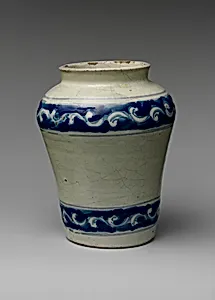
Medium
Tin-glazed earthenware
Dimensions
H. 6 1/4 in. (15.9 cm)
Classification
Jar
Culture
Mexican
Department
The American Wing
Museum
Metropolitan Museum of Art, New York, NY
Credit
Gift of Mrs. Robert W. de Forest, 1917
Accession Number
17.108.4
Rights
Public Domain
Art Historical Context
This charming tin-glazed earthenware jar, by an unknown Mexican artist around 1750, stands just 6¼ inches tall, making it a delicate example of everyday colonial artistry. The tin-glaze technique—where a tin oxide coating creates an opaque, brilliant white surface ideal for vibrant painted designs—was a hallmark of Mexican pottery the Spanish colonial era. Popularized in regions like Puebla, this method blended European maiolica traditions with local ingenuity, producing durable yet decorative vessels for households. Dating to the mid-18th century, the jar reflects Mexico's vibrant ceramic heritage amid New World trade and cultural exchange. Such pieces were often used for storing spices, oils, or sweets, combining utility with folkloric motifs that celebrated daily life. Its presence in The American Wing of the Metropolitan Museum of Art highlights the interconnected histories of the Americas, underscoring colonial influences that reached beyond borders. A generous gift from Mrs. Robert W. de Forest in 1917, this jar invites visitors to appreciate the anonymous makers whose skilled hands bridged continents, preserving a slice of 18th-century Mexican culture for modern eyes.