
Jar
Unknown Artist
late 12th–first half 13th century
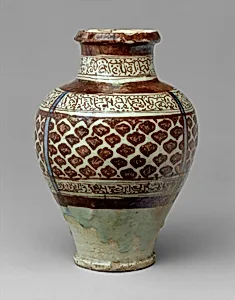
Medium
Stonepaste; underglaze painted in blue, luster-painted on transparent glaze
Dimensions
H. 9 3/8 in. (23.8 cm) Max. diam. 6 3/4 in. (17.1 cm)
Classification
Ceramics
Department
Islamic Art
Museum
Metropolitan Museum of Art, New York, NY
Credit
H.O. Havemeyer Collection, Gift of Horace Havemeyer, 1948
Accession Number
48.113.15
Rights
Public Domain
Tags
Art Historical Context
This elegant jar, crafted by an unknown artist in the 12th to first half of the 13 century, exemplifies the pinnacle of medieval Islamic ceramics. Housed in the Metropolitan Museum of Art's Department of Islamic Art, it 9 3/8 inches tall with a maximum diameter of 6 3/4 inches, making it a practical yet luxurious vessel likely used for storing oils, perfumes, or spices in affluent households. Made from stonepaste—a fine, white-firing body developed in the Islamic world to mimic Chinese porcelain—the jar features underglaze painting in vibrant blue and luster decoration over a transparent glaze. Lusterware, achieved by applying metallic oxides and firing in a reducing atmosphere, created a shimmering, iridescent effect that rivaled gold and silver vessels, symbolizing wealth and technical mastery. This technique flourished in regions like Iran and Syria, highlighting the era's innovative ceramic traditions amid trade routes connecting East and West. Part of the H.O. Havemeyer Collection and gifted in 1948, this jar offers a window into the cultural splendor of the Islamic Golden Age, where artistry blended utility with opulence. Visitors will appreciate its enduring glow, a testament to artisans' skill in transforming clay into treasure.