
Vase
Unknown Artist
12th–13th century
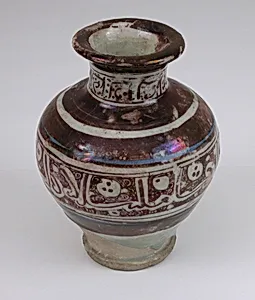
Medium
Stonepaste; underglaze and luster-painted
Dimensions
H. 6 1/4 in. (15.9 cm) Gr. Diam. 4 7/8 in. (12.4 cm)
Classification
Ceramics
Department
Islamic Art
Museum
Metropolitan Museum of Art, New York, NY
Credit
Henry G. Leberthon Collection, Gift of Mr. and Mrs. A. Wallace Chauncey, 1957
Accession Number
57.61.3
Rights
Public Domain
Art Historical Context
This elegant vase, crafted in the 12th–13th century, exemplifies the of Islamic ceramic artistry from the medieval Islamic world. Made of stonepaste—a composite of quartz, clay, and frit that mimicked the translucency of Chinese porcelain—it stands just over 6 inches tall with a graceful profile suited for holding perfumes, oils, or flowers. Housed in the Metropolitan Museum of Art's Islamic Department, it entered the collection in 1957 as part of the Henry G. Leberthon Collection, gifted by Mr. and Mrs. A. Wallace Chauncey. The vase's surface dazzles with underglaze painting and luster, a sophisticated technique where metallic oxides were fired in a reducing atmosphere to produce a shimmering, iridescent gold or coppery glow. This lusterware tradition, originating in 9th-century Iraq and flourishing under Seljuq patronage in Iran and Syria, showcased potters' mastery over light and color, transforming everyday objects into luminous treasures. Culturally, such vases highlight the Islamic world's role as a crossroads of innovation, blending Eastern and Western influences during a golden age of science and craft. Though the artist remains unknown, this piece invites visitors to marvel at the enduring beauty and technical brilliance of medieval Islamic ceramics.