
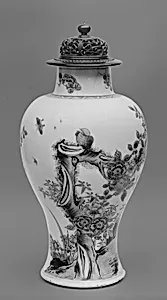
Jar
Unknown Artist
Medium
Porcelain
Dimensions
H. 9 1/4 in. (23.5 cm); W. 5 in. (12.7 cm)
Classification
Ceramics
Culture & Period
China · Qing dynasty (1644–1911), Kangxi period (1662–1722)
Department
Asian Art
Museum
Metropolitan Museum of Art, New York, NY
Credit
Bequest of Edmund C. Converse, 1921
Accession Number
21.175.22a, b
Rights
Public Domain
Art Historical Context
This elegant porcelain jar hails from China's Qing dynasty during the Kangxi period (1662–1722), a golden age for imperial porcelain production at the kilns of Jingdezhen. Standing at 9 1/4 inches tall and 5 inches wide, exemplifies the period's mastery of fine white porcelain, prized for its translucent purity and flawless glazing. Though the artist remains unknown, such vessels were crafted by skilled artisans under imperial patronage, reflecting the Kangxi emperor's enthusiasm for the arts and technological innovation in ceramics. Kangxi-era porcelain represented the pinnacle of Chinese ceramic techniques, with potters achieving remarkable thinness, even firing, and vibrant underglaze decorations—though specifics on this jar's motif are undocumented. These jars served practical purposes like storing spices, oils, or medicines, while also symbolizing luxury and status, often exported via the Silk Road and maritime trade to Europe and beyond, influencing global design. Now part of the Metropolitan Museum of Art's Asian Art collection through the 1921 bequest of Edmund C. Converse, this jar invites us to appreciate the enduring legacy of Chinese ingenuity, where everyday objects became timeless works of art.