
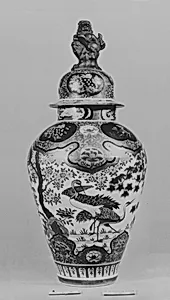
Vase with cover
Unknown Artist
18th century
Medium
Porcelain decorated in colored enamels and gold (Arita ware, Imari type)
Dimensions
H. (with cover) 36 1/4 in. (92.1 cm)
Classification
Ceramics
Culture & Period
Japan · Edo period (1615–1868)
Department
Asian Art
Museum
Metropolitan Museum of Art, New York, NY
Credit
Gift of Mrs. V. Everit Macy, 1923
Accession Number
23.225.386a, b
Rights
Public Domain
Tags
Art Historical Context
This striking porcelain vase with cover, standing over three feet tall, exemplifies the refined craftsmanship of Arita ware produced during Japan’s Edo period (1615–1868). Created in the 18th century in the kilns of Arita on Kyushu island, it belongs to the Imari type, named for the nearby port from which such wares were shipped abroad. The piece features vibrant overglaze enamels in rich colors accented with gold, a technique that allowed for intricate, luminous designs on the durable porcelain body. Decorated with motifs of cranes and flowers, the vase evokes themes of longevity, renewal, and natural beauty central to Japanese aesthetics. Cranes, often symbols of good fortune and immortality, soar amid delicate blossoms, creating a lively yet harmonious composition that would have enhanced any interior setting. Such large covered vases were prized both domestically and as export goods, reflecting the period’s thriving ceramic industry and cultural exchange. Acquired by the Metropolitan Museum through a generous gift in 1923, this work highlights the global appreciation for Japanese porcelain during the Edo era, when technical mastery and artistic elegance combined to produce objects of enduring elegance.