
Jar
Han dynasty (206 B.C.–A.D. 220)
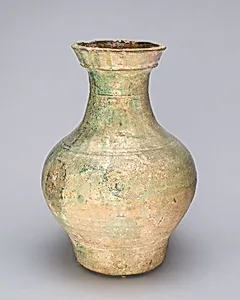
Medium
Stoneware with lead green glaze and underglaze molded decoration
Dimensions
H.: 36.2 cm (14 1/4 in.)
Classification
ceramics
Department
Arts of Asia
Museum
Art Institute of Chicago
Accession Number
27572
Rights
Public Domain
Art Historical Context
This elegant Han dynasty jar, standing at 14¼ inches tall, exemplifies the remarkable ceramic innovations of ancient China (206 B.C.–A.D. 220). Crafted from stoneware—a durable, high-fired clay—the vessel features a lead green glaze that produces a subtle, celadon-like sheen, one of the earliest examples of colored glazes in Chinese pottery. Underglaze molded decoration adds intricate patterns pressed into the clay before firing and glazing, showcasing the Han artisans' skill in combining functionality with subtle ornamentation. The Han era marked a golden age for Chinese ceramics, with advances in kiln technology enabling consistent high-temperature firing and the development of lead glazes for vibrant effects. Jars like this were likely used for storage of grain, wine, or oils in daily life, or as burial offerings symbolizing prosperity and the afterlife—a key cultural belief during the Han, when Confucianism and ancestor worship flourished. Today, housed in the Art Institute of Chicago's Arts of Asia department, this jar highlights the Han dynasty's influence on global ceramics, paving the way for later imperial porcelains. Its timeless form invites us to appreciate the blend of utility and artistry from over 2,000 years ago.
About the Artist
Unknown
The artist designated as "Unknown" in our virtual museum's collection exemplifies a poignant chapter in art history: creators whose identities have faded into obscurity despite the enduring power of their work. With only one known artwork attributed to them in our holdings, this figure represents countless anonymous hands that shaped visual culture across centuries. Museums worldwide, including th...