
Job and His Family
1825
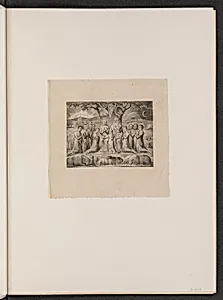
Medium
engraving on thin paper
Classification
Portfolio
Department
CG-E
Museum
National Gallery of Art, Washington, D.C.
Credit
Rosenwald Collection
Accession Number
1943.3.1655
Rights
Public Domain
Art Historical Context
William Blake's *Job and His Family* (1825) is the poignant opening plate from his monumental series *Illustrations of the Book of Job*, a series of 22 engravings that crown the visionary artist's career. Created in the twilight of his life, this work draws from the biblical tale of Job, depicting the patriarch in serene prosperity with his wife and ten children, surrounded by symbols of faith like musical instruments and a Bible. Blake, a quintessential Romantic artist and mystic, infused the scene with symbolic depth, foreshadowing Job's trials while celebrating human devotion amid divine mystery. Rendered as an engraving on thin paper using Blake's innovative relief etching technique—which allowed him to print text and image together like illuminated manuscripts—this medium exemplifies his genius as a printmaker. The fine lines and glowing tonal effects evoke a dreamlike spirituality, bridging 18th-century Enlightenment rationality with Romantic imagination. Housed in the National Gallery of Art's Rosenwald Collection (Department CG-E), this portfolio piece highlights Blake's enduring influence on British art and printmaking. For visitors, it invites reflection on resilience and the sublime, a timeless testament to one man's quest to visualize the ineffable.
About the Artist
William Blake · 1757–1827
William Blake (1757–1827) stands as one of the most visionary and unconventional artists in British history, a poet-painter-printmaker whose mystical imagination and radical vision profoundly shaped the Romantic movement. Born in London's Soho district, Blake experienced visions from childhood—claiming to see angels in trees at age eight—and these spiritual encounters would guide his art throughou...