
Job's Despair
1825
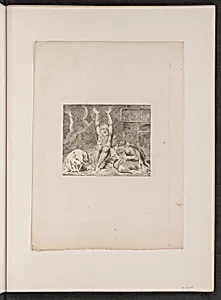
Medium
engraving on thick paper
Classification
Portfolio
Department
CG-E
Museum
National Gallery of Art, Washington, D.C.
Credit
Rosenwald Collection
Accession Number
1943.3.1684
Rights
Public Domain
Art Historical Context
**Job's Despair** is a poignant engraving from William Blake's masterful series *Illustrations of the Book of Job*, completed in 1825 near the end of the visionary artist's life. Blake (1757–1827), a key figure in British Romanticism, drew inspiration from the biblical tale of Job's suffering and redemption. This plate captures Job in utter despair, seated amid ruins with his wife, shattered musical instruments, and farm tools symbolizing his lost prosperity—a stark visual meditation on faith amid calamity. Printed as an engraving on thick laid paper, the work showcases Blake's innovative relief etching technique, where he incised text and images onto copper plates in a single, handmade process. This allowed for intricate line work, glowing highlights, and symbolic depth, blending poetry with visual art in his signature "illuminated printing" style. The thick paper enhances the tactile quality, preserving fine details for intimate study. Housed in the National Gallery of Art's Rosenwald Collection (Department CG-E, Portfolio classification), *Job's Despair* reflects Blake's mystical worldview, influencing generations of artists and illustrators. It invites visitors to ponder resilience and divine mystery, a timeless emblem of human endurance.
About the Artist
William Blake · 1757–1827
William Blake (1757–1827) stands as one of the most visionary and unconventional artists in British history, a poet-painter-printmaker whose mystical imagination and radical vision profoundly shaped the Romantic movement. Born in London's Soho district, Blake experienced visions from childhood—claiming to see angels in trees at age eight—and these spiritual encounters would guide his art throughou...