
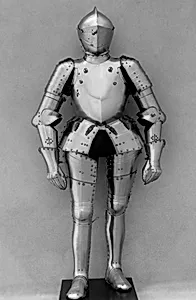
Jousting Armor
ca. 1580
Medium
Steel, leather
Dimensions
Wt. 55 lb. (24.95 kg)
Classification
Armor for Man
Culture
German, Augsburg
Department
Arms and Armor
Museum
Metropolitan Museum of Art, New York, NY
Credit
Gift of William H. Riggs, 1913
Accession Number
14.25.689a–p
Rights
Public Domain
Art Historical Context
Step into the clangor of Renaissance tournaments with Anton Peffenhauser's *ousting Armor* (ca. 1580), a masterpiece of German craftsmanship from Augsburg, a thriving hub of armor production in the late 16th century.ed from steel and leather, this suit weighs a formidable 55 pounds (24.95 kg), designed for a man to withstand the thunderous impacts of jousting lances while showcasing the era's blend of martial utility and artistic flair. Now housed in the Metropolitan Museum of Art's Arms and Armor Department—thanks to a 1913 gift from William H. Riggs—it exemplifies the pinnacle of Augsburg's armoring tradition. Peffenhauser, a renowned master armorer, crafted pieces that elevated functional protection into wearable sculpture. Jousting armor like this prioritized mobility and targeted defense—often with reinforced plates for the torso and helm—over the full battlefield encumbrance, reflecting the chivalric spectacles popular among European nobility. Augsburg's guilds fostered innovation, producing export-quality armor admired across courts. This suit invites us to ponder the human behind the steel: the knight's endurance, the armorer's precision in forging, shaping, and riveting. A testament to Renaissance ingenuity, it bridges warfare, sport, and artistry, reminding visitors of a time when armor was both shield and statement.