
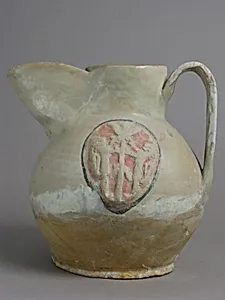
Jug
Unknown Artist
ca. 1400
Medium
Earthenware, tin-glaze (Majolica)
Dimensions
Overall: 10 7/8 x 11 1/4 x 9 15/16 in. (27.6 x 28.6 x 25.2 cm)
Classification
Ceramics
Culture
Italian
Department
Medieval Art
Museum
Metropolitan Museum of Art, New York, NY
Credit
Rogers Fund, 1916
Accession Number
16.154.7
Rights
Public Domain
Tags
Art Historical Context
This elegant jug, crafted around 1400 in Italy, exemplifies the vibrant world of maiolica—tin-glazed earthenware that brilliant colors and intricate designs to everyday ceramics. Standing about 11 inches tall, its rounded form and sturdy base made it ideal for serving wine or water at Renaissance-era tables, blending utility with artistry. The tin glaze, a technique borrowed from Islamic pottery via Spain and perfected by Italian workshops in cities like Deruta and Siena, created a smooth, white surface perfect for bold painted motifs, fired at low temperatures to preserve vivid blues, greens, and golds. A striking coat of arms adorns its surface, hinting at its prestigious origins—likely commissioned for a noble family or civic institution to display heraldry and status. Such pieces were status symbols in late medieval households, bridging the Gothic era's ornate styles with the emerging Renaissance emphasis on realism and individuality. Acquired through the Rogers Fund in 1916, this jug now graces the Metropolitan Museum of Art's Medieval Art collection, offering a tangible glimpse into Italy's ceramic golden age and the era's social hierarchies.