
Jupiter and Antiope: the larger plate
Medium
etching
Dimensions
205; 139
Rights
Public Domain
About this artwork
hoogte 139 mm x breedte 205 mm
Art Historical Context
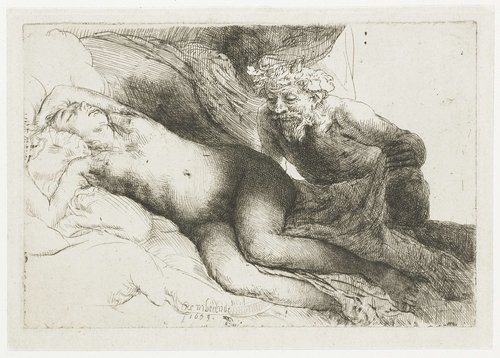
In the twilight of his career, Rembrandt van Rijn *Jupiter and Antiope the larger plate* in 1659, a masterful etching measuring 139 mm high by 205 mm wide. This Dutch Baroque genius, renowned for his innovative printmaking during the Golden Age, drew from Ovid's *Metamorphoses* to depict the mythological seduction: Jupiter, disguised as a satyr, gazes upon the slumbering nymph Antiope. The scene's intimate, sensual nudity reflects 17th-century fascination with classical antiquity, blending eroticism with profound human emotion—a hallmark of Rembrandt's empathetic storytelling. Rembrandt's etching technique shines here, employing deep burrs and drypoint for velvety textures and dramatic chiaroscuro. Unlike earlier reproductive prints, his "painterly" approach mimics oil painting's richness, with intricate hatching evoking soft flesh and shadowed forms. This larger version, more expansive than its smaller counterpart from the same year, allowed greater detail in landscape and figures, showcasing his late mastery amid personal hardships like bankruptcy. A prized rarity among collectors, this print underscores Rembrandt's enduring influence on graphic arts, bridging painting and printmaking. Visitors, imagine the satyr's tender gaze under candlelight—timeless desire captured in ink.
About the Artist
Rembrandt van Rijn · 1606–1669
Rembrandt Harmenszoon van Rijn (1606–1669) stands as one of the greatest visual artists in the history of Western art and the most important Dutch painter of the 17th century. Born in Leiden to a prosperous miller's family, Rembrandt transformed painting through his revolutionary use of light and shadow, his psychological depth in portraiture, and his elevation of etching to a fine art. His approx...