
K'el-hitaga'ngo
Unknown Artist
19th century
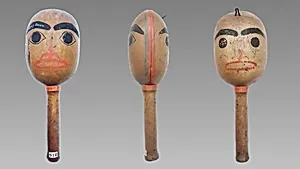
Medium
wood, pebbles, polychrome
Dimensions
Diam. 16.5 x L. 21.6cm (6 1/2 x 8 1/2in.)
Classification
Idiophone-Shaken-rattle
Culture
Native American (Haida or Tsimshian)
Department
Musical Instruments
Museum
Metropolitan Museum of Art, New York, NY
Credit
The Crosby Brown Collection of Musical Instruments, 1889
Accession Number
89.4.612
Rights
Public Domain
Art Historical Context
Nestled in the Metropolitan Museum of Art's Crosby Brown Collection of Musical Instruments *K'el-hitaga'ngo* is a captivating 19th-century shaken from the Haida or Tsimshian of the Pacific Northwest Coast Measuring 16.5 cm in diameter and .6 cm long, idiophone—crafted from wood filled with pebbles and adorned with vibrant polychrome paints—produces a rhythmic, resonant sound when shaken. The use of natural materials like wood and pebbles reflects the deep connection Northwest Coast artisans had with their environment, while the multicolored polychrome surface hints at traditional decorative techniques that often featured bold, symbolic motifs in formline style. Rattles like this held profound cultural significance in Haida and Tsimshian societies, serving as essential tools in ceremonies, storytelling, dances, and potlatches. The shaking motion would mimic natural sounds or spirits, invoking supernatural forces and enhancing communal rituals. Acquired by 1889, this piece offers a window into pre-colonial Indigenous musical traditions, preserved amid rapid cultural changes from European contact. Today, *K'el-hitaga'ngo* reminds us of the artistry in everyday sacred objects, blending sound, sculpture, and spirituality in a compact, powerful form.