
K'el-hitaga'ngo
Unknown Artist
19th century
Medium
wood, paint, pebbles
Dimensions
L. 27 × Diam. 11 cm (10 5/8 × 4 5/16 in.)
Classification
Idiophone-Shaken-rattle
Culture
Native American (Tlingit)
Department
Musical Instruments
Museum
Metropolitan Museum of Art, New York, NY
Credit
The Crosby Brown Collection of Musical Instruments, 1889
Accession Number
89.4.581
Rights
Public Domain
Art Historical Context
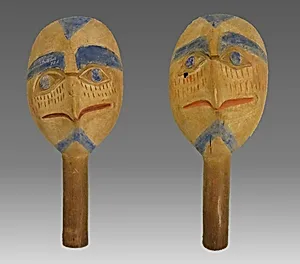
Nestled in the Metropolitan Museum of Art's Crosby Brown Collection of Musical Instruments *K'el-hitaga'ngo* is a captivating 19th-century shaken from the Tlingit people of Alaska's Northwest Coast. Crafted an unknown artist, this idiophone exemplifies the Tlingit's masterful integration of artistry and ritual function. Measuring 27 cm in length and 11 cm diameter, its compact form belies its cultural weight, serving as a percussive tool in ceremonies where sound invoked spiritual presence. Made from wood, vividly painted, and filled with pebbles, the rattle produces a distinctive rattling timbre when shaken—essential for shamanic performances, potlatches, and storytelling. Tlingit artisans renowned for their formline designs and symbolic motifs likely adorned it with pigments that highlighted supernatural themes, blending aesthetic beauty with sonic power. The use of natural materials underscores the Tlingit's deep connection to their environment, where everyday elements transformed into sacred objects. This artifact offers a window into Tlingit spiritual life, preserving traditions amid 19th-century cultural transitions. Visitors can appreciate how such instruments bridged the physical and metaphysical, echoing the resilience of Indigenous Northwest Coast heritage.