
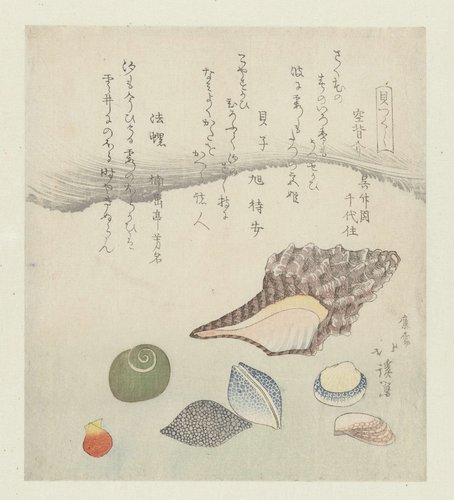
Kaitsukushi
1821
Medium
nishikie, with metallic pigments and blindprinting
Dimensions
206; 182
Rights
Public Domain
About this artwork
Legaat van J.A. Bierens de Haan, Amsterdam
Art Historical Context
**Kaitsukushi** by Totoya Hokkei, created in 1821, is a delicate *nishikie* woodblock, a vibrant "brocade picture technique that brought multicolored splendor to Japan's Edo-period art. Measuring just 206mm by 182mm, this intimate format was ideal for personal appreciation or private commissions like *surimono*—luxury prints often exchanged as New Year's gifts among the literati. Hokkei, a skilled pupil of the master Katsushika Hokusai, captured everyday grace in the ukiyo-e tradition, the "floating world" genre celebrating beauty, theater, and urban life. The print's allure shines through innovative techniques: metallic pigments gleam like mica-flecked waves or jewelry, evoking opulence, while blindprinting (*gauffrage*) adds subtle embossed textures, such as rippling fabrics or shells, heightening tactile realism without added ink. These methods elevated ukiyo-e from mass-produced posters to artisanal treasures, showcasing printers' precision in carving and registering colors. Hokkei's work reflects late Edo prosperity, where women in serene pursuits symbolized refined leisure. This piece entered European collections via the bequest of J.A. Bierens de Haan in Amsterdam, bridging Japanese craftsmanship with global admiration. A gem for *bijin-ga* lovers, it invites us to savor the artistry of fleeting moments.
About the Artist
Totoya Hokkei · 1780–1850
Totoya Hokkei (魚屋 北渓, 1780–1850), born Iwakubo Tatsuyuki in Edo (modern Tokyo), began his life as a humble fishmonger in the Yotsuya Samegahashi district, a trade reflected in his art name "Totoya," meaning fish shop. He transitioned to art through rigorous training, first studying under Kanō Yōsen'in Korenobu, head of the Kobikichō branch of the prestigious Kanō school, where he honed landscape p...