
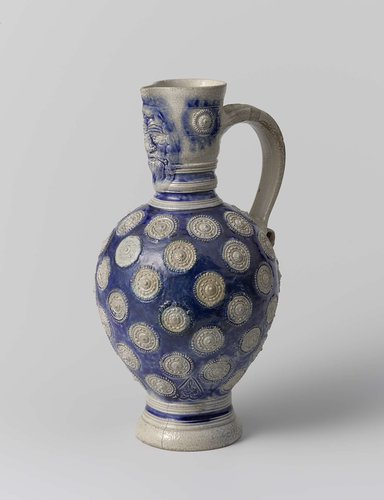
Kan met een masker en medaillons
ca. 1650 - ca. 1724
Medium
turning
Dimensions
8; 6.8; 26.8; 13.9; 15.2
Rights
Public Domain
About this artwork
rand: diameter 6,8 cm (met tuit)
Art Historical Context
### Kan met een Masker en MedaillonsThis exquisite turned wooden jug, titled *Kan met een masker en medillons* (Jug with a Mask and Medions), dates to approximately 1650–1724 and stands at 26.8 cm high with a rim diameter of 6.8 cm, complete with a spout. Craft by an anonymous artisan, it exemplifies the humble yet masterful functional art of the Dutch Golden Age, when everyday vessels like jugs were transformed into decorative treasures through skilled woodworking. The medium of "turning"—shaping wood on a lathe—allowed for the creation of precise, symmetrical forms with intricate details such as the prominent mask and medallions adorning its surface. These motifs, common in 17th- and early 18th-century European turned ware, likely served both aesthetic and symbolic purposes, evoking theatrical or classical themes. Lathe-turning was a celebrated craft in the Netherlands, practiced by guild artisans who rivaled silversmiths in finesse, turning practical items into status symbols for households. Though anonymous, this jug highlights the cultural importance of vernacular art during a prosperous era of trade and innovation. Its compact size suggests use for serving beverages at intimate gatherings, blending utility with artistry. Visitors will appreciate how such objects preserve the ingenuity of forgotten makers, bridging the gap between craft and fine art.
About the Artist
anonymous
In the vast tapestry of art history, "Anonymous" stands not as a singular individual but as a collective designation for countless unidentified creators whose works have endured across millennia. These artists, spanning prehistoric cave painters to medieval illuminators and folk craftsmen, produced the foundational layers of human visual culture. Prior to the Renaissance, when individual fame emer...