
Kannon
19th century
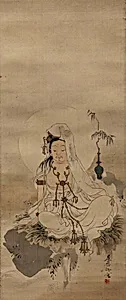
Medium
Hanging scroll; color on silk
Dimensions
13 3/4 x 5 in. (34.9 x 12.7 cm)
Classification
Paintings
Culture & Period
Japan · Meiji period (1868–1912)
Department
Asian Art
Museum
Metropolitan Museum of Art, New York, NY
Credit
Purchase, Gifts, Bequests, and Funds from various donors, by exchange, 1952
Accession Number
52.160.2
Rights
Public Domain
Tags
Art Historical Context
Shibata Zeshin's *Kannon*, a delicate hanging scroll from Japan's Meiji period (1868–1912), captures compassionate bodhisattva Kannon—known as the embodiment of mercy in Japanese Buddhism. Measuring a modest 13¾ × 5 inches (34.9 × 12.7 cm), this 19th-century painting in color on silk invites intimate contemplation, evoking the serene grace of spiritual devotion. Created during a transformative era when Japan opened to Western influences, the work reflects Zeshin's mastery in blending traditional techniques with innovative flair. Renowned for his lacquer artistry that mimicked painting, Zeshin here employs silk's luminous surface to achieve vibrant hues and fluid forms, hallmarks of Japanese scroll painting. Hanging scrolls like this were prized for private altars or seasonal displays, fostering personal connection to Buddhist ideals amid Meiji modernization. Housed in the Metropolitan Museum of Art's Asian Art collection since 1952, *Kannon* endures as a testament to Buddhism's cultural heart in Japan, reminding us of compassion's timeless appeal. Pause before it, and feel the bodhisattva's gentle gaze.
About the Artist
Shibata Zeshin · 1807–1891
Japanese, 1807–1891