
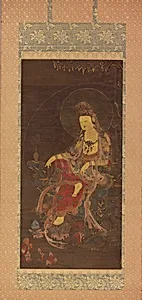
Water-Moon Avalokiteshvara (Suwol Gwaneum bosal)
mid-14th century
Classification
Painting
Department
Smithsonian Collection
Museum
Smithsonian American Art Museum
Credit
Gift of Charles Lang Freer
Accession Number
F1904.13
Rights
Public Domain
Tags
About this artwork
This painting, executed in ink, colors, and gold on silk, follows the same Chinese prototype as numerous other surviving examples executed in Korea during the late Goryeo period. The willow branch is held in a small vase to the side of the Bodhisattva. The small figure in a devotional pose may represent an allusion to passage in the Avatamsaka sutra. The details of this painting, from the elegant pose of the deity to the delicate use of color to render elements of the costume are characteristic ...
Art Historical Context
**Water-Moon Avalokhvara (Suwol Gwaneum bosal *Mid-14th century ink, colors, and gold on* Step into the tranquil world of late Goryeo Korea (918–1392) with this exquisite Buddhist painting, a masterpiece from the Smithsonian American Art Museum's Charles Lang Freer collection. during the dynasty's artistic zenith, it depicts Avalokiteshvara, the compassionate bodhisattva of mercy, in the graceful Water-Moon form—a popular iconography symbolizing purity and enlightenment. The deity's elegant pose, haloed in gold, holds a willow branch in a side vase, a ritual element for purification, while a small devotional figure below alludes to a passage in the Avatamsaka Sutra, inviting viewers into a meditative narrative. This work exemplifies Korean Buddhist painting at its peak, blending Chinese prototypes with distinctly Korean refinement. Delicate colors render the flowing robes and jewelry, while touches of gold illuminate misty landscapes in a decorative flourish typical of Goryeo elegance. Such paintings adorned temples, fostering devotion amid a flourishing Buddhist culture before the dynasty's decline. A gift from collector Charles Lang Freer, it captures the era's spiritual harmony and artistic virtuosity.
About the Artist
Unknown
The artist designated as "Unknown" in our virtual museum's collection exemplifies a poignant chapter in art history: creators whose identities have faded into obscurity despite the enduring power of their work. With only one known artwork attributed to them in our holdings, this figure represents countless anonymous hands that shaped visual culture across centuries. Museums worldwide, including th...