
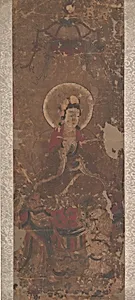
Pu Xian on Elephant
Medium
Hanging scroll, fragment; ink and color on paper
Dimensions
21 7/16 x 7 7/8 in. (54.5 x 20.0 cm)
Classification
Paintings
Culture & Period
China · Ming dynasty (?) (1368–1644)
Department
Asian Art
Museum
Metropolitan Museum of Art, New York, NY
Credit
From the Collection of A. W. Bahr, Purchase, Fletcher Fund, 1947
Accession Number
47.18.84
Rights
Public Domain
Tags
Art Historical Context
Behold the graceful fragment of a hanging scroll, *Pu Xian on Elephant*, a captivating work from China's Asian Art tradition, likely dating to the Ming dynasty (8–1644). Crafted by an unidentified artist in ink and color on paper, this narrow painting (21 7/16 x 7 7/8 in.) captures the Bodhisattva Pu Xian, in Chinese Buddhism as the embodiment of power and wisdom. Mounted astride a majestic white elephant—his traditional mount—the figure exudes serene authority, a testament to the era's devotion to Mahayana Buddhist iconography. Hanging scrolls like this were prized in Ming scholarly and temple settings, unrolled for contemplation during rituals or meditation. The use of ink for precise outlines and subtle washes, combined with vibrant colors, highlights the technical finesse of Chinese painting, blending literati elegance with religious fervor. Though a fragment, it preserves the dynamic composition typical of such devotional art, where Pu Xian symbolizes the expansive power of the Buddha's teachings. Acquired from A. W. Bahr's collection and now at The Metropolitan Museum of Art (Purchase, Fletcher Fund, 1947), this piece invites us to ponder Ming China's rich fusion of spirituality and artistry, bridging the divine and the everyday.